The story of elephant evolution reads like a epic saga written by nature herself, spanning tens of millions of years and featuring creatures as small as dogs growing into the largest land animals alive today. Few evolutionary journeys capture the imagination quite like the transformation from modest swamp-dwellers to the majestic megaherbivores that now roam African savannas and Asian forests.
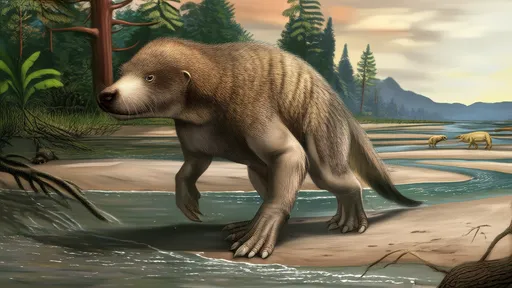
Our tale begins in the Eocene epoch, approximately 50 million years ago, when the earliest known proboscidean - Moeritherium - waded through North African wetlands. Standing just 60 centimeters at the shoulder, this pig-sized creature bore little resemblance to modern elephants beyond its flexible upper lip and enlarged second incisors that hinted at future tusks. Paleontologists believe these amphibious ancestors spent their days browsing on soft aquatic plants, their compact bodies and short limbs better suited for buoyancy than supporting massive weight.
As the Oligocene period dawned 30 million years later, the evolutionary stage welcomed Phiomia, a transitional figure that grew to 1.5 meters tall. This marked the emergence of characteristic proboscidean features - elongated jaws, columnar legs, and more pronounced tusks in both upper and lower jaws. Fossil evidence suggests Phiomia's trunk remained relatively underdeveloped, functioning more as a muscular upper lip than the sophisticated manipulative organ seen in later species. The shifting climate and expanding grasslands were beginning to reshape these creatures in profound ways.
The Miocene epoch witnessed an explosion of proboscidean diversity, with over 150 identified species branching across Africa, Eurasia, and the Americas. Among these, Gomphotherium stood out as a particularly successful genus, reaching 3 meters in height with four substantial tusks. Their shovel-shaped lower tusks likely helped dig for aquatic vegetation, while the downward-curving upper pair may have stripped bark from trees. This period also saw the emergence of the first truly trunk-dominated species, as changing dental structures reflected adaptations to tougher terrestrial plants.
By the Pliocene, the evolutionary path narrowed toward modern elephant forms with the appearance of Primelephas, the probable last common ancestor of today's African and Asian elephants. Standing nearly 4 meters tall, this creature displayed the classic single upper tusk configuration and high-domed skull that would characterize future species. The trunk had evolved into a precision instrument capable of plucking individual grass blades, while complex molars with folded enamel ridges could process abrasive savanna vegetation.
The Pleistocene ice ages witnessed the rise and fall of the magnificent mammoths, whose frozen remains have provided unprecedented insight into proboscidean biology. Contrary to popular imagery, woolly mammoths weren't significantly larger than modern African elephants, though other species like the steppe mammoth reached staggering 4.5-meter heights. Their curved tusks sometimes exceeded 5 meters in length, while specialized teeth allowed them to grind tough tundra grasses. Recent DNA analysis reveals these icons of the ice age shared about 99.4% of their genetic code with present-day Asian elephants.
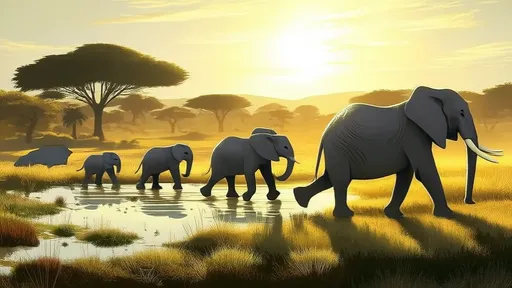
Modern elephants represent the surviving heirs of this extraordinary lineage. The African bush elephant stands as the largest land animal on Earth today, with bulls reaching 4 meters at the shoulder and weighing up to 10 tons. Their Asian cousins display slightly smaller frames but greater cognitive abilities in certain problem-solving tests. Both species face existential threats from habitat loss and poaching, their dwindling numbers a stark reminder that even the most successful evolutionary stories can meet abrupt endings without conservation efforts.
What makes the elephant's evolutionary journey particularly remarkable is how incremental changes accumulated over geological timescales to produce such radically different forms. From Moeritherium's amphibious lifestyle to the mammoth's arctic adaptations, each transformation reflected precise responses to environmental pressures. The trunk alone represents one of nature's most extraordinary innovations - beginning as a snorkeling apparatus in aquatic ancestors before becoming the multipurpose tool that defines elephantine success today.
Paleontologists continue uncovering new chapters in this ongoing story. Recent discoveries in the Arabian Peninsula have revealed previously unknown dwarf species that inhabited islands during periods of low sea levels. Meanwhile, advances in genetic engineering have sparked debates about potentially "de-extincting" woolly mammoths to restore Arctic ecosystems. Whether studying fossilized footprints in Kenya or analyzing collagen proteins from million-year-old remains, researchers keep adding depth to our understanding of how these magnificent creatures came to be.
The elephant's evolutionary history offers more than just scientific fascination - it provides crucial insights for conservation biology. Understanding how past climate changes affected proboscidean diversity helps predict how modern species might adapt to current environmental shifts. As living repositories of this ancient lineage, today's elephants carry genetic wisdom accumulated over 50 million years of survival against all odds. Their continued existence depends on whether humanity will honor that legacy or become the force that finally ends one of evolution's greatest success stories.

By /Jun 9, 2025
By /Jun 9, 2025
By /Jun 9, 2025
By /Jun 9, 2025
By /Jun 9, 2025
By /Jun 9, 2025

By /Jun 9, 2025
By /Jun 9, 2025

By /Jun 9, 2025
By /Jun 9, 2025

By /Jun 9, 2025
By /Jun 9, 2025

By /Jun 9, 2025
By /Jun 9, 2025
By /Jun 9, 2025
By /Jun 9, 2025
