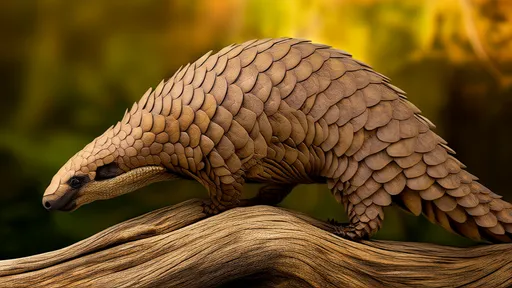
The natural world has long been a source of inspiration for human innovation, and the humble pangolin is no exception. This scaly mammal, often mistaken for a reptile due to its armored exterior, possesses a unique trait that has captured the attention of material scientists: self-healing keratin scales. These overlapping plates, which shield the pangolin from predators, are now serving as a blueprint for the next generation of high-performance fibers, including a revolutionary self-repairing Kevlar variant.
Pangolins are the only mammals wholly covered in scales, and these scales are composed primarily of keratin—the same protein found in human hair and nails. However, pangolin keratin is arranged in a way that grants it extraordinary durability and flexibility. When damaged, the scales can regenerate over time, a feature that has eluded synthetic materials until now. Researchers have spent years studying this biological marvel, and their findings are paving the way for breakthroughs in protective gear, military armor, and even medical applications.
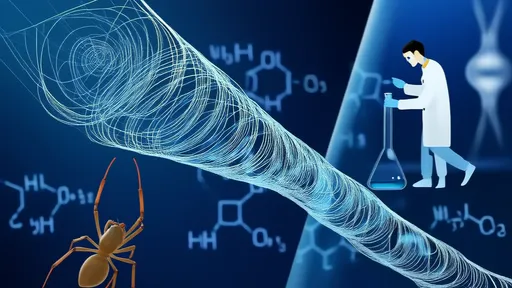
The key to the pangolin’s self-healing ability lies in the molecular structure of its keratin. Unlike the brittle keratin found in human nails, pangolin keratin forms a complex, layered matrix with embedded fibers that realign when stressed. This allows minor cracks or cuts to "heal" as the fibers gradually shift back into place, restoring the scale’s integrity. Scientists have replicated this mechanism in the lab by engineering Kevlar fibers with microscopic channels filled with a reactive polymer. When the fiber is damaged, the polymer seeps into the cracks and hardens, mimicking the pangolin’s natural repair process.
Kevlar, the synthetic fiber renowned for its use in bulletproof vests, has always been strong but prone to degradation under repeated stress. Traditional Kevlar relies on tightly woven layers to dissipate force, but once a layer is compromised, the entire structure weakens. The new bio-inspired variant, however, can recover from damage without human intervention. This innovation could extend the lifespan of protective equipment dramatically, reducing the need for frequent replacements in high-risk professions like law enforcement and firefighting.
The implications of self-healing Kevlar extend far beyond personal protection. In aerospace engineering, where material fatigue is a constant concern, this technology could lead to lighter, more resilient aircraft components. Similarly, in the medical field, surgical implants coated with self-repairing fibers could reduce the risk of failure over time. Even everyday consumer products, such as smartphone screens or car tires, might one day incorporate this technology to enhance durability.
Despite its promise, scaling up production of self-healing Kevlar remains a challenge. The process of embedding reactive polymers into fibers without compromising their strength is delicate and costly. Researchers are also working to improve the speed of the healing process—currently, it takes hours or even days for the fibers to fully repair, whereas pangolin scales can recover more quickly in their natural environment. Nevertheless, the progress made so far is a testament to the power of biomimicry.
Beyond Kevlar, the study of pangolin scales is inspiring other material innovations. For instance, architects are exploring how the scales’ overlapping design could improve the flexibility of earthquake-resistant buildings. Meanwhile, robotics engineers are testing scale-like exteriors for machines that operate in harsh conditions. The pangolin’s armor, refined by millions of years of evolution, is proving to be a versatile muse for human ingenuity.
As research continues, ethical considerations have come to the forefront. Pangolins are among the most trafficked animals in the world, hunted for their scales and meat. Scientists emphasize that their work relies on non-invasive studies, such as 3D scanning and molecular analysis, rather than harming live specimens. Conservationists hope that highlighting the pangolin’s biological genius will bolster efforts to protect the species from extinction.
The marriage of biology and materials science is ushering in a new era of innovation, and the pangolin’s self-healing scales are at the heart of it. What began as curiosity about a peculiar animal has evolved into a transformative technology with the potential to save lives and reshape industries. In the end, the pangolin’s greatest legacy may not be its armor, but the inspiration it provides for a more resilient future.

By /Jun 9, 2025
By /Jun 9, 2025
By /Jun 9, 2025
By /Jun 9, 2025

By /Jun 9, 2025
By /Jun 9, 2025
By /Jun 9, 2025
By /Jun 9, 2025

By /Jun 9, 2025
By /Jun 9, 2025

By /Jun 9, 2025
By /Jun 9, 2025
By /Jun 9, 2025
By /Jun 9, 2025
By /Jun 9, 2025
By /Jun 9, 2025
