The intersection of science and art has always been a fertile ground for innovation, but few collaborations are as unexpected—or as visually striking—as bioart, particularly the practice of painting with bacteria. This emerging discipline merges microbiology with creative expression, transforming petri dishes into canvases and bacterial colonies into vibrant pigments. The result is a mesmerizing fusion of biological processes and aesthetic vision, challenging traditional boundaries between the laboratory and the studio.
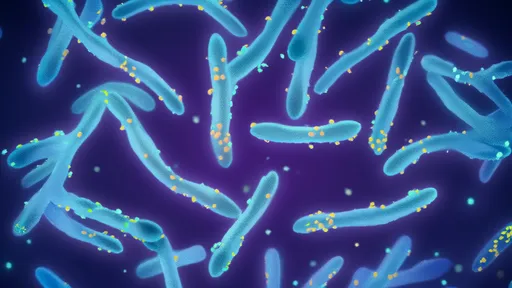
At its core, bacterial art relies on the natural properties of microorganisms. Certain species, such as Serratia marcescens, produce vivid red pigments, while Chromobacterium violaceum yields deep violets. Artists and scientists harness these traits, carefully culturing strains to create living palettes. The process is as precise as it is imaginative: streaks, dots, and gradients are meticulously plotted, accounting for growth rates, nutrient availability, and even temperature fluctuations that influence the final composition. What begins as an invisible sketch emerges, over days, into a breathtaking display of color and form.
The allure of bacterial art lies not only in its visual impact but also in its inherent unpredictability. Unlike conventional paints, microbes are alive—they respire, multiply, and interact with their environment. An artist may guide their growth, but the organisms retain agency, often introducing organic imperfections that lend each piece a unique vitality. This dynamic quality has drawn comparisons to performance art, where the artwork evolves in real time, its appearance shifting until the culture is finally fixed or preserved.
Beyond aesthetics, bioart raises profound questions about humanity’s relationship with the microscopic world. By rendering bacteria visible—even beautiful—artists subvert the pervasive perception of microbes as mere pathogens. Works like Microbial Rainbows or Living Portraits invite viewers to reconsider the elegance of biological systems, fostering a dialogue between fear and fascination. For scientists, these creations serve as unconventional outreach tools, demystifying complex research while celebrating its creative potential.
Critics of the genre argue that bacterial art risks trivializing scientific rigor, reducing meticulous lab work to mere spectacle. Yet proponents counter that it achieves the opposite: by engaging public curiosity, it bridges disciplines often seen as mutually exclusive. Exhibitions in galleries and science museums alike have drawn diverse audiences, sparking conversations about synthetic biology, antibiotic resistance, and even climate change through the lens of art. A petri dish depicting melting polar ice caps, rendered in temperature-sensitive bacteria, can resonate more viscerally than a graph or dataset.
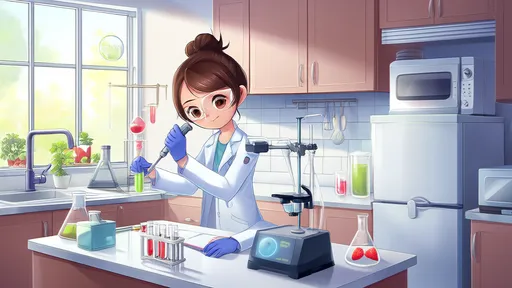
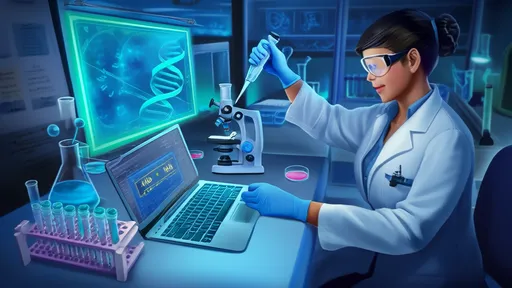
The technical challenges of bacterial painting are nontrivial. Contamination, overgrowth, or stalled metabolism can derail weeks of preparation. Artists collaborate closely with microbiologists to troubleshoot issues like pigment stability or to engineer novel strains through genetic modification. Some pioneers, like the collective Bacterial Art Lab, have even open-sourced their protocols, encouraging amateurs to experiment—albeit with strict ethical guidelines to prevent unintended environmental release.
Ethical considerations loom large in this field. While most bacterial artworks use non-pathogenic strains, the deliberate cultivation of microorganisms outside containment labs invites scrutiny. Regulatory bodies increasingly grapple with how to classify such projects: as art, as bioengineering, or as something entirely new. Meanwhile, artists confront dilemmas about sustainability—sterilizing cultures post-exhibition versus preserving them indefinitely in bioreactors, each choice carrying ecological implications.
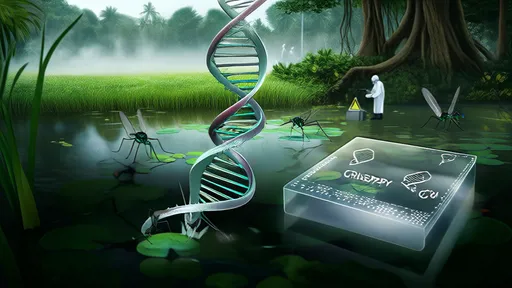
As tools like CRISPR and synthetic biology advance, the possibilities for bacterial art expand exponentially. Recent breakthroughs include light-responsive bacteria that change color under UV exposure, and "living inks" capable of self-repairing patterns. These innovations blur the line between medium and message, suggesting a future where artworks might adapt to their surroundings or respond to viewer interaction. The very definition of "art" may need reimagining when the canvas is alive.
For now, bacterial art remains a niche pursuit, but its influence is growing. Universities now offer courses blending biology and design, while residencies pair artists with research labs. Major auctions have featured microbial pieces, though their ephemeral nature complicates traditional notions of ownership and value. Collectors must decide whether to acquire a physical artifact (say, a resin-embedded dish) or the rights to recreate a living piece—a concept as fluid as the medium itself.
Ultimately, painting with bacteria is more than a novelty; it’s a testament to the boundless creativity at the intersection of disciplines. Each swirling colony tells dual stories: one of genetic coding and metabolic pathways, another of human curiosity and the urge to make meaning from the invisible. In an era of accelerating scientific discovery, bioart offers a poignant reminder that wonder and knowledge need not exist in separate realms—they can flourish together, one petri dish at a time.
By /Jul 3, 2025
By /Jul 3, 2025
By /Jul 3, 2025
By /Jul 3, 2025
By /Jul 3, 2025
By /Jul 3, 2025
By /Jul 3, 2025
By /Jul 3, 2025

By /Jul 3, 2025
By /Jul 3, 2025
By /Jul 3, 2025

By /Jul 3, 2025
By /Jul 3, 2025
By /Jul 3, 2025
By /Jul 3, 2025
By /Jul 3, 2025
By /Jul 3, 2025
By /Jul 3, 2025
By /Jul 3, 2025
By /Jul 3, 2025
