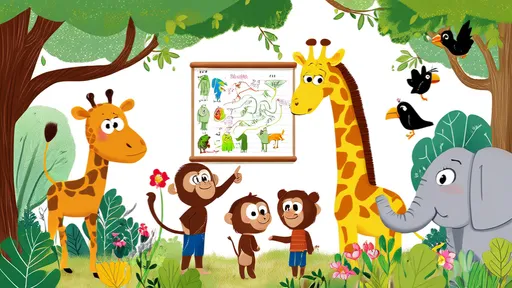
Explaining the concept of evolution to children can be both a delightful and challenging endeavor. Unlike adults, kids process information through stories, visuals, and hands-on experiences. The key lies in breaking down complex ideas into bite-sized, relatable pieces that spark curiosity rather than confusion. By weaving together imagination and science, we can create a bridge between abstract theory and a child’s everyday world.
Start with the familiar. Children often notice differences in animals or plants but may not connect these variations to a larger scientific principle. A simple way to introduce evolution is by discussing how dogs come in all shapes and sizes—from tiny Chihuahuas to giant Great Danes—yet they all belong to the same species. This variation, shaped by human selection over centuries, mirrors the natural selection process in the wild. By linking something they know (like pets) to broader concepts, we lay the groundwork for understanding how traits change over time.
Storytelling is a powerful tool. Instead of diving into mutations or genetic drift, frame evolution as an epic adventure spanning millions of years. Imagine a group of birds stranded on different islands: some with big beaks, others with small ones. Over time, those with beaks suited to their environment survive and pass on their traits, while others fade away. This narrative approach turns a scientific process into a dynamic tale of adaptation and survival, much like their favorite adventure stories.
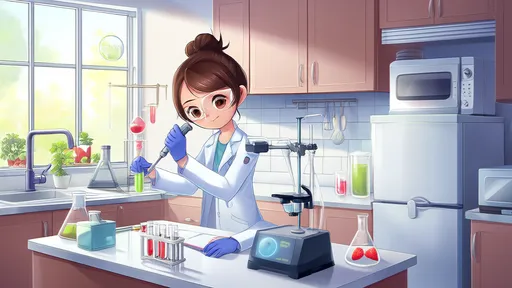
Hands-on activities solidify abstract ideas. For example, a "finch beak simulation" using tweezers, chopsticks, and clips to pick up different "food items" (like rice or beans) can demonstrate how certain traits are advantageous. Kids quickly grasp that not all "beaks" work equally well for every task, mimicking real-life selective pressures. Similarly, fossil-making with clay or tracing the evolution of whales from land-dwellers to ocean giants through drawings can make the past feel tangible.
Embrace their questions—even the quirky ones. When a child asks why monkeys aren’t turning into humans today, it’s a golden opportunity to clarify misconceptions. Explain that evolution isn’t a ladder but a sprawling tree with countless branches, where change happens incrementally over vast timelines. Comparing it to a game of "telephone," where tiny changes accumulate over many rounds, can help them visualize how small shifts lead to big differences across generations.
Above all, keep it playful. Evolution isn’t just a textbook topic; it’s a detective story written in fossils, DNA, and the living world around us. Whether through dinosaur toys, animated videos, or backyard bug observations, the goal is to nurture wonder. After all, every child who marvels at a butterfly’s colors or puzzles over a peacock’s tail is already thinking like an evolutionary biologist—they just don’t know it yet.
By /Jul 3, 2025
By /Jul 3, 2025
By /Jul 3, 2025
By /Jul 3, 2025
By /Jul 3, 2025
By /Jul 3, 2025

By /Jul 3, 2025
By /Jul 3, 2025

By /Jul 3, 2025
By /Jul 3, 2025
By /Jul 3, 2025

By /Jul 3, 2025
By /Jul 3, 2025
By /Jul 3, 2025
By /Jul 3, 2025

By /Jul 3, 2025
By /Jul 3, 2025
By /Jul 3, 2025
By /Jul 3, 2025
By /Jul 3, 2025
