The history of biology is punctuated by groundbreaking experiments that shattered existing paradigms and reshaped our understanding of life. From the early days of genetic transformation to the precision of CRISPR gene editing, these discoveries didn’t just answer questions—they rewrote the rules entirely. What makes these experiments truly disruptive isn’t merely their technical brilliance but their ability to force scientists to see the living world through an entirely new lens.
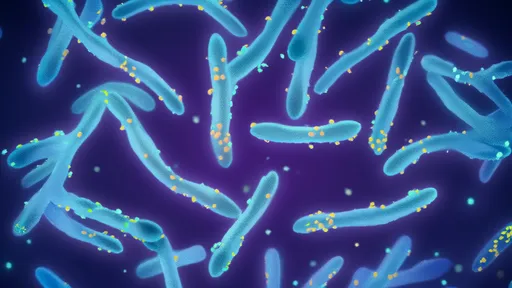
One cannot discuss transformative biological experiments without mentioning Frederick Griffith’s 1928 work on pneumococcus bacteria. At a time when genes were still abstract concepts, Griffith demonstrated that something in dead virulent bacteria could "transform" harmless live bacteria into pathogenic ones. This observation, later confirmed by Avery, MacLeod, and McCarty as DNA-mediated transformation, laid the foundation for molecular biology. The idea that genetic information could be transferred between organisms was revolutionary—it hinted at a universality in life’s blueprint that no one had dared to postulate.
The mid-20th century witnessed another seismic shift with the Hershey-Chase experiment. By using radioactive labels to track DNA and proteins in bacteriophages, Martha Chase and Alfred Hershey delivered irrefutable evidence that DNA, not protein, carried genetic information. This elegant experiment settled a fierce debate and set the stage for the DNA-centric view of biology that would dominate the coming decades. It’s worth noting how their experimental design—using a virus’s simplicity to answer a fundamental question—exemplifies the power of choosing the right model system.
Perhaps no experiment has been more visually striking than Meselson and Stahl’s demonstration of semi-conservative DNA replication. Their ingenious use of nitrogen isotopes created a physical separation of DNA strands that could be centrifuged and photographed. The resulting gradient patterns didn’t just support Watson and Crick’s model—they made the process tangible. This experiment exemplifies how technical innovation (density gradient centrifugation) can provide definitive answers where theoretical arguments alone fall short.
The 1970s brought experiments that blurred the line between biology and technology. Cohen and Boyer’s creation of the first recombinant DNA molecule wasn’t just a technical achievement—it was the birth of genetic engineering. By combining DNA from different species in a single plasmid, they proved that life’s operating system could be hacked. The ethical debates this sparked were as significant as the science itself, showing how biological discoveries inevitably spill into philosophical and societal realms.
Kary Mullis’s development of PCR in 1983 represents one of those rare experiments that simultaneously advanced basic science and created an indispensable tool. The idea that DNA could be exponentially amplified through thermal cycling was so transformative that it’s now impossible to imagine molecular biology without it. What’s often overlooked is how PCR democratized genetic analysis—turning what once required radioactive isotopes and Southern blots into a technique accessible to undergraduate labs.
The turn of the millennium saw another conceptual earthquake with the publication of the human genome draft sequence. While not a single experiment per se, this international effort demonstrated that complex organisms could have their genetic code completely deciphered. The surprises kept coming—far fewer genes than expected, vast stretches of non-coding DNA with regulatory functions, and evidence of horizontal gene transfer even in humans. The genome project didn’t just provide data; it forced a complete rethinking of genetic complexity.
RNA interference (RNAi), discovered unexpectedly in petunias and later characterized in C. elegans by Fire and Mello, revealed an entirely new layer of genetic regulation. The realization that cells use small RNA molecules to silence genes provided both a powerful research tool and insights into evolutionary battles between viruses and their hosts. This discovery exemplifies how studying seemingly obscure phenomena (flower pigmentation, in this case) can unveil universal biological principles.
The CRISPR-Cas9 story represents perhaps the most rapid transition from fundamental discovery to world-changing application. What began as investigations into bacterial immune systems—studying how microbes record viral DNA sequences—became the most precise gene-editing tool ever developed. The ethical implications of CRISPR, particularly regarding human germline editing, continue to spark intense debate, proving that the most disruptive biological experiments don’t just change what we can do—they challenge who we think we are.
Looking across these paradigm-shifting experiments, certain patterns emerge. Many were initially met with skepticism, their implications too radical for immediate acceptance. Nearly all relied on innovative methodologies rather than incremental improvements to existing techniques. Perhaps most importantly, these discoveries share an ability to reveal hidden connections—between bacteria and humans, between genes and environment, between fundamental science and applied technology. As biology continues its relentless advance, future disruptive experiments will undoubtedly follow this tradition—not just answering our questions, but teaching us how to ask better ones.
By /Jul 3, 2025
By /Jul 3, 2025
By /Jul 3, 2025
By /Jul 3, 2025
By /Jul 3, 2025

By /Jul 3, 2025

By /Jul 3, 2025
By /Jul 3, 2025

By /Jul 3, 2025
By /Jul 3, 2025

By /Jul 3, 2025

By /Jul 3, 2025
By /Jul 3, 2025
By /Jul 3, 2025
By /Jul 3, 2025

By /Jul 3, 2025
By /Jul 3, 2025
By /Jul 3, 2025
By /Jul 3, 2025
By /Jul 3, 2025
