Revolution in Cancer Early Detection: Liquid Biopsy Captures Circulating Tumor DNA

Jul 3, 2025 By

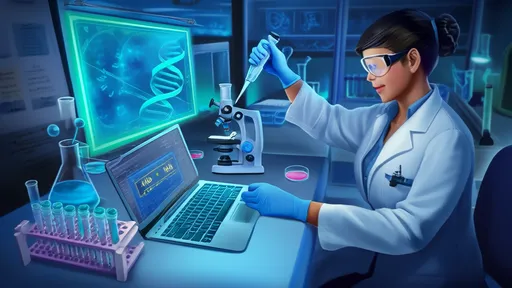
The landscape of cancer detection is undergoing a seismic shift, driven by the emergence of liquid biopsy technologies that analyze circulating tumor DNA (ctDNA). This non-invasive approach promises to revolutionize early cancer screening, offering hope for earlier diagnoses and more personalized treatment strategies. Unlike traditional tissue biopsies, which often require invasive procedures, liquid biopsies rely on simple blood draws to detect genetic fragments shed by tumors into the bloodstream.

The Science Behind ctDNA and Liquid Biopsies

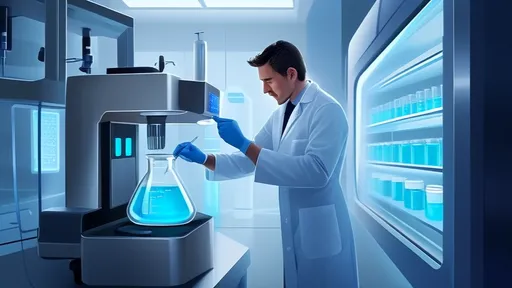
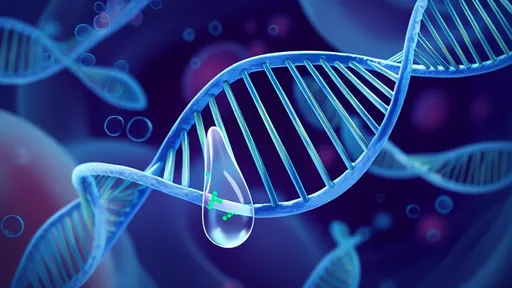
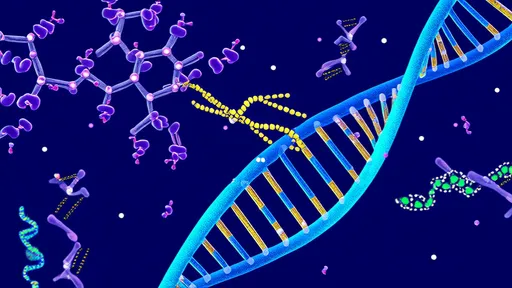
Circulating tumor DNA refers to small fragments of DNA released into the blood as cancer cells die and break apart. These fragments carry the unique genetic mutations and alterations characteristic of the tumor they originated from. Liquid biopsies work by isolating and analyzing this ctDNA, providing a molecular snapshot of the cancer's genetic profile. Advanced sequencing technologies and bioinformatics tools enable researchers to detect even minute quantities of ctDNA amidst the vast background of normal cell-free DNA.

The sensitivity of these tests has improved dramatically in recent years, with some assays capable of identifying tumor-derived DNA at concentrations as low as 0.1% of total cell-free DNA. This enhanced sensitivity is crucial for early detection, when tumor burden is minimal and ctDNA levels are correspondingly low. Moreover, the ability to track multiple mutations simultaneously increases the likelihood of catching cancers at their most treatable stages.

Clinical Applications and Advantages

Liquid biopsies offer several distinct advantages over conventional screening methods. Traditional approaches like imaging or tissue biopsies often detect cancer only after symptoms appear or when tumors have reached a substantial size. In contrast, ctDNA analysis can potentially identify malignancies before they become visible on scans or cause noticeable symptoms. This earlier detection window could significantly improve patient outcomes, particularly for aggressive cancers where early intervention is critical.

Another major benefit lies in the dynamic nature of liquid biopsies. Since ctDNA levels fluctuate with tumor activity, these tests can provide real-time monitoring of treatment response and disease progression. This capability allows clinicians to modify therapeutic strategies promptly when resistance develops or when new mutations emerge. Additionally, the non-invasive nature of blood draws makes serial testing feasible, enabling closer surveillance without subjecting patients to repeated invasive procedures.

Challenges and Limitations

Despite their promise, liquid biopsies for early cancer detection face several hurdles. The low abundance of ctDNA in early-stage disease remains a significant technical challenge, requiring extremely sensitive detection methods. False positives can occur when detecting rare mutations, as some may represent clonal hematopoiesis (age-related blood cell mutations) rather than actual cancer signals. Conversely, false negatives may arise when tumors shed little DNA into circulation or when the specific mutations present aren't covered by the test panel.

Another critical consideration involves the clinical interpretation of positive results. Detecting ctDNA doesn't always indicate where in the body the tumor is located, potentially necessitating follow-up imaging or other diagnostic procedures. There's also ongoing debate about how to manage patients with positive liquid biopsy results but negative conventional workups—a scenario that may become more common as these tests improve in sensitivity.

The Future of Cancer Early Detection

Research efforts are rapidly advancing to address current limitations and expand the applications of liquid biopsies. Large-scale clinical trials are underway to validate the use of ctDNA analysis for population-level screening, particularly for cancers that currently lack effective early detection methods. Scientists are also developing multi-analyte approaches that combine ctDNA detection with protein biomarkers and other molecular signatures to improve accuracy.

Artificial intelligence is playing an increasingly important role in analyzing the complex data generated by liquid biopsies. Machine learning algorithms can help distinguish true cancer signals from background noise and may eventually predict tumor origin based on mutation patterns. As these technologies mature, we may see the development of comprehensive "cancer interception" strategies that identify and treat malignancies at their earliest, most vulnerable stages.

The integration of liquid biopsies into routine clinical practice will require careful consideration of ethical, economic, and implementation factors. However, the potential to transform cancer outcomes makes this one of the most exciting frontiers in modern medicine. With continued innovation and validation, ctDNA-based screening could fundamentally change our approach to cancer detection and management in the coming decade.
Recommend Posts
Biology

The Biohacking Trend: Regulatory Dilemmas of DIY Gene Editing

By /Jul 3, 2025

The rise of the biohacking movement has ushered in an era where genetic modification is no longer confined to high-tech laboratories. In garages, makeshift labs, and even community spaces, a growing number of DIY enthusiasts are experimenting with CRISPR and other gene-editing tools. What began as a fringe subculture has now evolved into a global phenomenon, raising urgent questions about ethics, safety, and the limits of regulatory oversight.
Biology

Cryonics: Science or Science Fiction?

By /Jul 3, 2025

The concept of cryopreserving human bodies to cheat death sounds like something straight out of a science fiction novel. Yet, for decades, organizations like Alcor and the Cryonics Institute have been offering this controversial service to those willing to bet on future scientific breakthroughs. The idea is simple: freeze a legally deceased person at extremely low temperatures in the hope that future medicine might one day revive and cure them. But how much of this is grounded in real science, and how much remains speculative fiction?
Biology

Gene Drives: Controversy Over Ecological Risks in Eradicating Malaria Mosquitoes

By /Jul 3, 2025

The scientific community stands at a crossroads as gene drive technology emerges as a potential game-changer in the fight against malaria. By forcing genetic modifications through wild mosquito populations, this controversial approach could theoretically collapse entire species of disease-carrying insects. Yet beneath its revolutionary promise lies a simmering debate about ecological consequences that might ripple far beyond mosquito eradication.
Biology

How to Explain Evolution to Kids? A Collection of Fun Teaching Methods

By /Jul 3, 2025

Explaining the concept of evolution to children can be both a delightful and challenging endeavor. Unlike adults, kids process information through stories, visuals, and hands-on experiences. The key lies in breaking down complex ideas into bite-sized, relatable pieces that spark curiosity rather than confusion. By weaving together imagination and science, we can create a bridge between abstract theory and a child’s everyday world.
Biology

Biological Art: The Scientific and Aesthetic Collision of Painting with Bacteria

By /Jul 3, 2025

The intersection of science and art has always been a fertile ground for innovation, but few collaborations are as unexpected—or as visually striking—as bioart, particularly the practice of painting with bacteria. This emerging discipline merges microbiology with creative expression, transforming petri dishes into canvases and bacterial colonies into vibrant pigments. The result is a mesmerizing fusion of biological processes and aesthetic vision, challenging traditional boundaries between the laboratory and the studio.
Biology

Kitchen Lab: A Guide to Home DNA Extraction Experiments

By /Jul 3, 2025

In an era where science education often feels confined to sterile laboratories and expensive equipment, a quiet revolution is taking place in home kitchens across the world. The Kitchen Laboratory movement has gained remarkable traction, with amateur scientists discovering that their culinary spaces can double as credible research facilities for fundamental biological experiments. Among these DIY science projects, one particularly fascinating experiment stands out – extracting DNA from common household ingredients using nothing more than everyday kitchen items.
Biology

Top Ten Disruptive Experiments in the History of Biology: From Griffith to CRISPR

By /Jul 3, 2025

The history of biology is punctuated by groundbreaking experiments that shattered existing paradigms and reshaped our understanding of life. From the early days of genetic transformation to the precision of CRISPR gene editing, these discoveries didn’t just answer questions—they rewrote the rules entirely. What makes these experiments truly disruptive isn’t merely their technical brilliance but their ability to force scientists to see the living world through an entirely new lens.
Biology

Aging Cell Atlas: Mapping the Differences in Organ Aging

By /Jul 3, 2025

The human body is a complex mosaic of tissues and organs, each aging at its own pace. Recent breakthroughs in single-cell sequencing have enabled scientists to construct a detailed Atlas of Senescent Cells, revealing striking variations in how different organs deteriorate over time. This biological cartography doesn’t just catalog where aging occurs—it exposes why some systems fail decades before others.
Biology

Genetics of Pain: Why Are Some People Born Pain-Free?

By /Jul 3, 2025

Pain is a universal human experience, a biological alarm system that warns us of injury or illness. Yet, a rare subset of the population lives without this sensation entirely. These individuals, often diagnosed with congenital insensitivity to pain (CIP), navigate life unaware of the burns, fractures, or internal ailments that would cripple others with agony. The phenomenon has puzzled scientists for decades, but recent advances in pain genetics are unraveling the molecular mysteries behind this extraordinary condition.
Biology

Fibrotic Reversal: The Biological Code for Scar Tissue Regeneration

By /Jul 3, 2025

The human body possesses remarkable healing capabilities, yet the persistent problem of fibrosis has long baffled medical researchers. Unlike typical wound healing where damaged tissue is replaced with functional cells, fibrosis results in thick, collagen-rich scar tissue that often impairs organ function. Recent breakthroughs in regenerative medicine, however, are revealing the biological code that may allow us to reverse this process.
Biology

Xenotransplantation Breakthrough: Gene-Edited Pig Hearts

By /Jul 3, 2025

In a groundbreaking medical milestone, the field of xenotransplantation has taken a revolutionary leap forward with the successful transplantation of a genetically modified pig heart into a human patient. This unprecedented achievement marks a turning point in addressing the critical shortage of donor organs and opens new avenues for saving countless lives. The procedure, performed by a team of pioneering surgeons, demonstrates the potential of CRISPR gene-editing technology to overcome biological barriers that have long hindered cross-species organ transplantation.
Biology

Viral Reservoir Elimination: The Key Battleground for HIV Cure

By /Jul 3, 2025

The quest for an HIV cure has entered a pivotal phase as researchers focus their efforts on targeting viral reservoirs – the hidden sanctuaries where the virus evades current treatments. These reservoirs, composed of long-lived immune cells harboring dormant HIV DNA, represent the final frontier in the battle to eradicate the infection completely. While antiretroviral therapy (ART) can suppress viral replication to undetectable levels, it cannot eliminate these stubborn reservoirs that reignite the infection whenever treatment stops.
Biology

Epigenetic Weight Loss: Can Metabolism Be Regulated Without Changing Genes?

By /Jul 3, 2025

The growing field of epigenetics is revolutionizing our understanding of weight management. Unlike traditional approaches that focus on calorie restriction or intense exercise regimens, epigenetic research suggests that we may be able to influence metabolic processes without changing our underlying genetic code. This emerging science reveals how environmental factors and lifestyle choices can modify gene expression, potentially offering new avenues for sustainable weight loss.
Biology

Revolution in Cancer Early Detection: Liquid Biopsy Captures Circulating Tumor DNA

By /Jul 3, 2025

The landscape of cancer detection is undergoing a seismic shift, driven by the emergence of liquid biopsy technologies that analyze circulating tumor DNA (ctDNA). This non-invasive approach promises to revolutionize early cancer screening, offering hope for earlier diagnoses and more personalized treatment strategies. Unlike traditional tissue biopsies, which often require invasive procedures, liquid biopsies rely on simple blood draws to detect genetic fragments shed by tumors into the bloodstream.
Biology

Mitochondrial Transplantation: Injecting New Energy into Failing Cells

By /Jul 3, 2025

In the ever-evolving landscape of medical science, mitochondrial transplantation has emerged as a groundbreaking approach to rejuvenating failing cells. This innovative technique, still in its experimental stages, holds the promise of addressing a myriad of degenerative diseases by replacing damaged mitochondria with healthy ones. The implications are vast, ranging from treating heart disease to neurodegenerative disorders, offering a glimmer of hope where traditional therapies have fallen short.
Biology

Surge in Autoimmune Diseases: The Hygiene Hypothesis and the Loss of Microbes

By /Jul 3, 2025

The sharp rise in autoimmune diseases across industrialized nations has become one of modern medicine’s most perplexing puzzles. From rheumatoid arthritis to type 1 diabetes and multiple sclerosis, these conditions—where the body’s immune system mistakenly attacks its own tissues—are increasing at rates that cannot be explained by genetics alone. Researchers are now turning their attention to a provocative idea: our ultra-sanitized, microbe-depleted lifestyles might be fueling this epidemic. At the heart of this theory lies the hygiene hypothesis, which suggests that early exposure to microbes is crucial for training the immune system. But as societies become more sterile, the consequences may be far more profound than we ever imagined.
Biology

Superbugs Apocalypse? Global Strategies to Combat Antibiotic Resistance"

By /Jul 3, 2025

The specter of a "superbug apocalypse" looms large over global health discussions as antibiotic resistance escalates from a theoretical threat to a grim reality. The World Health Organization has labeled antimicrobial resistance (AMR) one of the top ten global public health threats facing humanity. What began as medical curiosity—bacteria surviving penicillin exposure in the 1940s—has snowballed into a crisis rendering last-resort drugs ineffective against common infections. The post-antibiotic era, once dismissed as alarmist rhetoric, now features in contingency plans from New Delhi to New York.
Biology

Circadian Rhythms: Clock Gene Networks Beyond Melatonin

By /Jul 3, 2025

The intricate dance of biological rhythms extends far beyond the well-known sleep hormone melatonin, revealing a sophisticated genetic network that orchestrates our internal clocks. While melatonin has long been the poster child for circadian regulation, scientists are now uncovering a vast array of clock genes that work in concert to fine-tune our physiological processes. These genes form a complex web of interactions, influencing everything from metabolism to cognition, and their discovery is reshaping our understanding of how organisms adapt to the Earth's daily rotations.
Biology

Non-coding RNA: The Regulatory Gold Mine in Junk DNA

By /Jul 3, 2025

For decades, the vast stretches of DNA that don’t code for proteins were dismissed as "junk DNA"—evolutionary leftovers with no real function. But the scientific community has undergone a paradigm shift in recent years, uncovering a hidden treasure trove within these non-coding regions. Non-coding RNAs (ncRNAs), once overlooked, are now recognized as master regulators of gene expression, playing pivotal roles in development, disease, and even evolution.
Biology

Protein Droplets: Miniature Chemical Reactors Inside Cells

By /Jul 3, 2025

In the bustling metropolis of a living cell, where countless molecular interactions occur every second, scientists have discovered remarkable structures that defy traditional understanding of cellular organization. These protein droplets, once thought to be mere aggregates, are now recognized as sophisticated microreactors that orchestrate vital biochemical processes with exquisite precision.