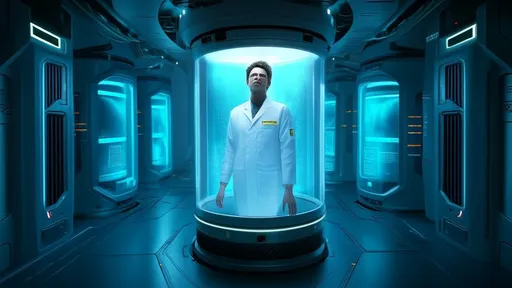
The concept of cryopreserving human bodies to cheat death sounds like something straight out of a science fiction novel. Yet, for decades, organizations like Alcor and the Cryonics Institute have been offering this controversial service to those willing to bet on future scientific breakthroughs. The idea is simple: freeze a legally deceased person at extremely low temperatures in the hope that future medicine might one day revive and cure them. But how much of this is grounded in real science, and how much remains speculative fiction?
The Science Behind Cryonics
Cryonics relies on the principle that extreme cold can slow or halt biological decay. At temperatures below -130°C, molecular activity essentially stops, a state known as "vitrification." The process begins immediately after legal death is declared. The body is cooled in an ice bath, blood is replaced with cryoprotectant fluids to prevent ice crystal formation, and then it’s gradually cooled to -196°C in liquid nitrogen. Proponents argue that while current technology can’t reverse the process, future advancements in nanotechnology or molecular repair could one day make revival possible.
However, critics point out significant hurdles. Vitrification isn’t perfect—cellular damage still occurs, and the brain’s intricate neural connections, which encode memory and personality, may not survive intact. Even if revival were possible, the question of how to repair the original cause of death (e.g., advanced cancer or organ failure) remains unanswered. The scientific community remains deeply divided, with many dismissing cryonics as pseudoscience while others see it as a long-shot gamble worth taking.
The Ethical and Legal Quandaries
Cryonics isn’t just a scientific challenge—it’s an ethical minefield. Legally, cryopreservation can only occur after death, raising philosophical questions about what "death" truly means. Is a cryopreserved individual "dead" if there’s potential for future revival? And who decides when or if revival should be attempted? Families of the preserved often grapple with these questions, especially given the hefty costs (ranging from $28,000 for neuropreservation to $200,000 for full-body preservation at Alcor).
There’s also the issue of consent and agency. Most cryonics patients sign up as adults, but what happens if future generations deem revival unethical or impossible? The lack of regulatory oversight adds another layer of uncertainty. Unlike organ donation or medical research, cryonics operates in a legal gray area, with no guarantees or standardized protocols.
The Future: A Calculated Bet or a Pipe Dream?
For now, cryonics remains a fringe pursuit, with fewer than 500 bodies preserved worldwide. Yet, its proponents include prominent scientists and tech entrepreneurs who view it as an extension of life-extension research. Some argue that even a 1% chance of revival is better than certain oblivion. Others see it as a wasteful distraction from more immediate medical advancements.
Whether cryonics will ever transition from sci-fi fantasy to medical reality depends on breakthroughs we can’t yet foresee. What’s clear is that it forces us to confront profound questions about mortality, the limits of science, and how far humanity should go in its quest to conquer death. For those who choose preservation, it’s the ultimate leap of faith—one where the final verdict may not come for centuries.

By /Jul 3, 2025
By /Jul 3, 2025

By /Jul 3, 2025

By /Jul 3, 2025
By /Jul 3, 2025

By /Jul 3, 2025

By /Jul 3, 2025
By /Jul 3, 2025

By /Jul 3, 2025

By /Jul 3, 2025
By /Jul 3, 2025

By /Jul 3, 2025
By /Jul 3, 2025

By /Jul 3, 2025
By /Jul 3, 2025

By /Jul 3, 2025

By /Jul 3, 2025

By /Jul 3, 2025
By /Jul 3, 2025

By /Jul 3, 2025
